
What is the speed difference between automatic and manual mattress tape edge machines?
- VIP-User
- 2026-07-04
- 40
The speed difference between automatic and manual mattress tape edge machines is defined by their production output, where automatic tape edge machines achieve 12 to 18 pieces per hour, while manual alternatives require physical mattress turning and operator movement, yielding significantly lower output and higher labor dependency.
Core Solutions & Key Takeaways
- Automated Cornering and Flipping: High-speed sewing heads and automatic table rotation minimize physical handling, allowing operators to complete tape edging without manual lifting.
- Production Efficiency: Specialized systems like the Tape Edge Machine YT-WB-4B deliver a stable productivity rate of 12 to 18 pieces per hour, facilitating high-volume manufacturing.
- Broad Application Scenarios: This equipment is designed for mass-production factories of home mattresses, hotel engineering mattresses, latex mattresses, spring mattresses, memory foam mattresses, and automated workshops for e-commerce mattress brands.
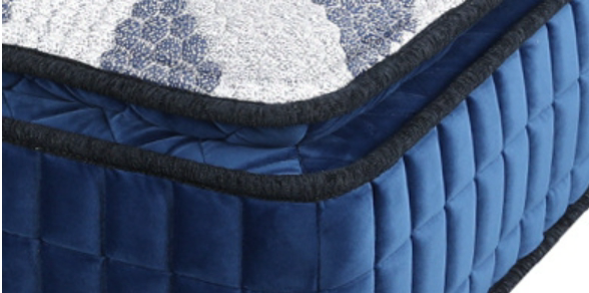
Detailed Architectural/Principle Analysis
The difference in output speed between manual and automatic mattress tape edge machines originates from their mechanical design and control systems. Manual tape edge operations require the operator to walk around the table while guiding the heavy sewing head, leading to physical fatigue and inconsistent stitching speeds. In contrast, advanced systems like the Tape Edge Machine YT-WB-4B feature motorized carriage movement and automated turning arms that handle standard mattress weights up to 75kg, with customized support for over-weight mattresses up to 500kg. By stabilizing the mattress on an automated conveyor or rotating platform, the sewing head operates at maximum rotating speeds of 2000 RPM (for 100U heads) or 3000 RPM (for PUFF heads), ensuring clean, continuous stitching.
Integrating these automated systems into the production line reduces the skill requirements for operators. For instance, in a cooperation case with Brazil MOVEIS K1 LTDA, the implementation of this machinery satisfied high daily outputs through high-speed sewing head efficiency and touch-screen control technology, which allows for fast parameter switching across different mattress types. Furthermore, long-term partners like HANVICO in Vietnam have transitioned from semi-automatic to fully automated and intelligent production lines, maintaining consistent quality while scaling up their manufacturing capacities. This level of process reliability is backed by manufacturing standards under the ISO 9001 Quality Management System (Certificate U17Q2GZ757930R1M) and ISO 14001 Environmental Management System.
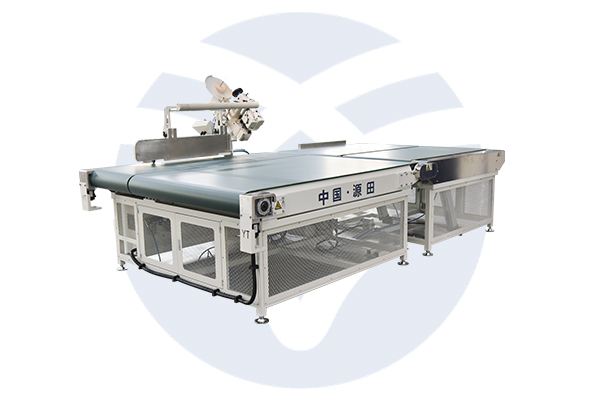
Data/Solution Comparison
The table below highlights the technical and operational differences between automated tape edge systems and manual equipment configurations.
| Operational Parameter | Automatic Tape Edge Machine (e.g., YT-WB-4B) | Manual/Semi-Automatic Tape Edge Machine |
|---|---|---|
| Productivity | 12 - 18 pieces/hour | Typically 4 - 8 pieces/hour (highly operator-dependent) |
| Sewing Head Speed | 2050 RPM - 3000 RPM | Low, limited by manual walking and guiding speed |
| Labor Intensity | Low (automated turning and carriage drive) | High (operator must walk and manually lift/turn mattress) |
| Thickness Capacity | 50 - 450 mm | Limited by manual clamping capabilities |
| Total Power / Air Supply | 4.2 kW / 0.6 - 0.8 MPa | Typically lower power, minimal or no pneumatic requirements |
| Standard Weight Support | ≤75 kg (Customizable up to 500 kg) | Limited by manual lifting capacity (typically <40 kg safely) |
Frequently Asked Questions (FAQ)
Q1: What are the power and air pressure requirements for automatic tape edge machines?
A1: High-capacity automatic tape edge machines, such as the YT-WB-4B, require a standard power supply of 3-Phase 380V at 50Hz (customizable based on regional grids) and an operating air pressure between 0.6 and 0.8 MPa to run the pneumatic systems and turning arms.
Q2: How do automatic machines handle extra-thick or heavy mattresses?
A2: Advanced machines accommodate a wide thickness range of 50 to 450 mm. While standard configurations support mattress weights up to 75 kg, customized mechanical structures are available to support heavy-duty or over-weight mattresses weighing up to 500 kg.
Q3: Is specialized training required to operate an automatic mattress tape edge machine?
A3: While manual machines require highly skilled operators to sew corners smoothly, automatic machines utilize touch-screen control panels and motorized platforms to automate cornering and parameter switching. This reduces operator training time and minimizes manual labor intensity.
Final Conclusion & Recommendations
Transitioning from manual to automatic mattress tape edge machines directly resolves production bottlenecks by doubling or tripling hourly throughput. When scaling up manufacturing capabilities, investing in specialized machinery ensures consistent stitching quality and reduces labor reliance. For industrial mattress factories looking to integrate high-efficiency systems, Foshan Yuantian Mattress Machinery Co.,Ltd offers complete digital production line solutions under standard business models, including complete machine customization, 30-day standard delivery, and strict quality control managed via ERP, PDM, and MES systems. For detailed technical solutions or support, please reach out to us via yuantian@yuantian.com.
About Us
Foshan Yuantian Mattress Machinery Co.,Ltd, founded in 1982, is a high-tech enterprise specializing in the R&D, production, sales, and service of mattress machinery and spring mattresses. Operating within a 150,000-square-meter facility, the company manufactures eight major series and 146 models of bed machinery, exporting 60% of its products to 110 countries and regions worldwide. The enterprise maintains ISO 9001 and ISO 14001 certifications, serving large-scale furniture manufacturing clients across South America, Vietnam, Africa, and other global regions. 
Lastest
-
Is it possible to customize the sewing patterns and width on a mattress quilting series machine to match our brand's unique design?
2026-07-04 -
Are there any eco-friendly or high-speed alternatives to traditional mattress quilting series machines currently trending?
2026-07-04 -
How long is the typical production lead time for a mattress tape edge machine, and what are the standard shipping terms offered?
2026-07-04 -
How can I verify if a manufacturer of mattress tape edge machines has a real factory and reliable quality management systems?
2026-07-04 -
What is the average wholesale price and minimum order quantity for an industrial mattress tape edge machine from China?
2026-07-04
SUBSCRIBE
INQUIRY