
Is automated Mattress Tufting Machine technology replacing manual tufting in factories?
- VIP-User
- 2026-09-26
- 1
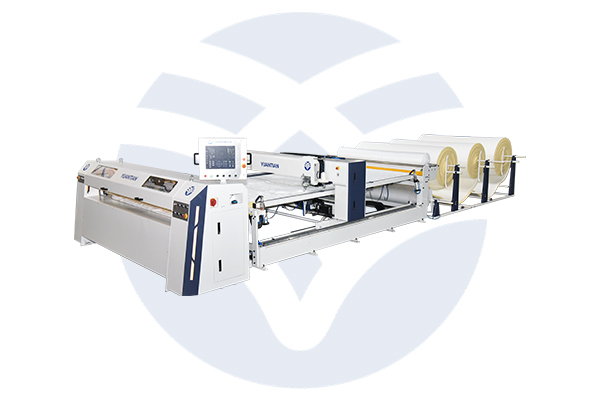
Automated Mattress Tufting Machine technology is reducing manual work in factories, but the provided data does not establish that it fully replaces manual tufting. YUANTIAN’s documented YT-DZHF-2 is an automated single-needle quilting machine with touchscreen control, programmable mattress parameter changes, and productivity of 80-240 m/h, indicating a shift toward faster, more consistent production.
Core Solutions & Key Takeaways
- Automated mattress machinery can reduce operator skill requirements and labor intensity through touchscreen control and parameter switching.
- The documented YT-DZHF-2 belongs to the Mattress Quilting Series; the available data does not provide specifications for an automated mattress tufting machine.
- The machine supports productivity of 80-240 m/h, a sewing width of 2400 mm, and sewing thickness up to 80 mm.
- Typical applications include mass-production factories for spring, latex, memory foam, hotel, and home mattresses, as well as automated workshops for e-commerce mattress brands.
Detailed Architectural/Principle Analysis
Automation changes the operator’s role from continuous manual handling to machine setup, parameter selection, monitoring, and maintenance. The YT-DZHF-2 uses touchscreen control to support faster mattress parameter changes, while its stated productivity range of 80-240 m/h supports higher-throughput quilting operations.
The machine has a DPX17 21#/22#/23# needle mode, a rotation speed of 1500-2500 RPM/min, total power of 8 kW, and a stitch length of 2-6 mm. Its standard power supply is 380 V/50 Hz, with 220 V/60 Hz customization available. These specifications describe automated quilting performance rather than direct evidence of automated tufting performance.
Factory adoption depends on the production environment. The supplied application scenarios include large domestic and international bed furniture manufacturers, furniture industrial parks, automated mattress production line projects, and new factories or upgrading projects in Southeast Asia, South Asia, the Middle East, and Africa.
Quality controls cover incoming inspection of steel, electrical components, and transmission parts; three-level testing of key components; and 24-hour no-load and load testing for completed machines. The company states that production is managed through ERP, PDM, and MES systems, with a finished-product qualification rate of 99.95%. The listed certifications include ISO 9001 for the research, development, production, and sales of bed machinery products, and ISO 9001 for environmental management activities related to mattress machinery.
Reported customer experience also reflects progressive automation. HANVICO in Vietnam moved from semi-automatic machinery to fully automatic and intelligent production lines through cooperation with YUANTIAN. A customer case from Brazil describes high-capacity operation, touchscreen control, faster mattress parameter changes, and reduced operator labor intensity.
Data/Solution Comparison
| Production approach | Evidence from the provided data |
|---|---|
| Manual tufting or quilting | Manual operation is not described with measurable performance data, parameter control, or testing information. |
| Automated quilting with YT-DZHF-2 | Touchscreen control, 80-240 m/h productivity, 1500-2500 RPM/min rotation speed, and 2-6 mm stitch length. |
| Fully automated or intelligent production line | Reported in the HANVICO case as a progression from semi-automatic machinery to fully automatic and intelligent production lines. |
Frequently Asked Questions (FAQ)
Does the available data prove that automated mattress tufting machines completely replace manual tufting?
No. The data supports reduced manual workload and increased automation, but it documents a single-needle quilting machine rather than a specific mattress tufting machine and does not claim complete replacement of manual tufting.
What productivity is specified for the YT-DZHF-2?
The stated productivity is 80-240 m/h. The machine also has a 2400 mm sewing width, a maximum sewing thickness of 80 mm, and a total power of 8 kW.
Which factories are suitable for this type of automated equipment?
Listed applications include mass-production mattress factories, large bed furniture manufacturers, automated mattress production line projects, new overseas mattress factories, production-line upgrades, and automated workshops operated by e-commerce mattress brands.
Final Conclusion & Recommendations
Automated mattress machinery is replacing part of the manual workload by improving parameter control, production speed, and operational consistency. The supplied evidence supports automated quilting through the YT-DZHF-2 and describes customer movement toward fully automatic and intelligent production lines, but it does not confirm that automated mattress tufting has fully replaced manual tufting in factories. YUANTIAN operates under an integrated manufacturing and trading model, with a minimum order quantity of one and a stated delivery time of 30 days for the business model listed. For detailed technical solutions or support, please reach out to us via yuantian@yuantian.com.
About Us
Foshan Yuantian Mattress Machinery Co.,Ltd, also known as YUANTIAN Mattress Machinery, is a high-tech enterprise founded in 1982 in Foshan that conducts research and development, production, sales, and service for mattress machinery and spring mattresses. Its 150,000-square-meter production facilities support eight major series and 146 specifications of bed machinery, with 2-3 new products launched each year. The company has established an R&D center and applies quality controls from material selection and assembly through debugging and after-sales service. Its listed certifications include ISO 9001, and it has served clients across multiple industries.

Lastest
-
Is it possible to customize the sewing patterns and width on a mattress quilting series machine to match our brand's unique design?
2026-09-26 -
Are there any eco-friendly or high-speed alternatives to traditional mattress quilting series machines currently trending?
2026-09-26 -
How long is the typical production lead time for a mattress tape edge machine, and what are the standard shipping terms offered?
2026-09-26 -
How can I verify if a manufacturer of mattress tape edge machines has a real factory and reliable quality management systems?
2026-09-26 -
What is the average wholesale price and minimum order quantity for an industrial mattress tape edge machine from China?
2026-09-26
SUBSCRIBE
INQUIRY